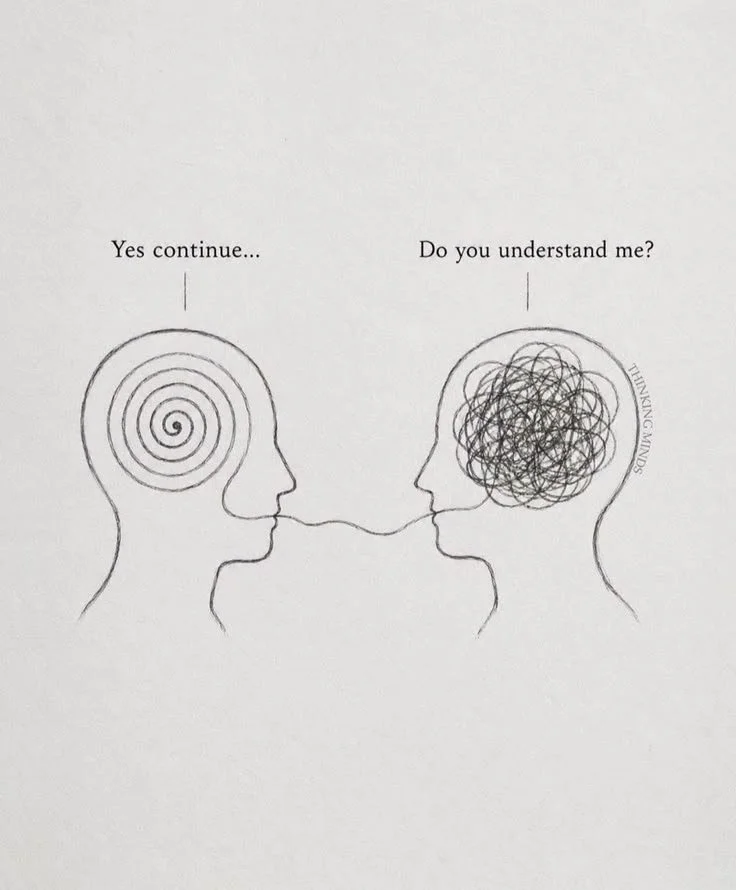
Let's talk about what it means to own our words and let other people do the same. I think a lot of anxiety in relationships happens in the space between what someone actually says and what we think they REALLY mean. Someone tells us they're fine and we wonder if they're secretly upset, someone says they don't mind where we eat and we worry they'll hate the place we pick, or someone says yes to a favor and instead of trusting it, we start calculating whether they wanted to say no.
On the other side, we might say "It's fine" when it isn't, agree to something we don't want to do, or say "I don't care" while quietly hoping they'll figure out what we actually want. Then we get frustrated when they believe us (we've all been there!). This is why owning our words can be such an important relational practice. I get to be responsible for communicating what I mean, you get to be responsible for communicating what you mean, and neither of us has to become an expert in decoding the other person.
OWNING OUR WORDS MEANS TAKING RESPONSIBILITY FOR WHAT WE COMMUNICATE
If I say yes when I mean no, the other person may reasonably believe I meant yes. If I say I'm not upset when I am, they'll keep going as if everything's okay, and if I say I don't have a preference while secretly hoping they pick what I want, I haven't actually given them what they'd need to consider my preference. Communication isn't always easy, of course. Sometimes we don't know what we feel yet, and sometimes saying what we really think feels super vulnerable, especially when we're scared of conflict.
Owning our words means recognizing that other people can't reliably respond to information we haven't given them! If I want someone to know something, part of my job is finding a way to tell them.
PEOPLE-PLEASING CAN MAKE DIRECT COMMUNICATION FEEL REALLY SCARY
For people-pleasers, saying exactly what we mean can feel risky. If your sense of safety in relationships has depended on being agreeable, easygoing and helpful, direct communication can feel almost aggressive even when it's totally reasonable. Saying "I don't want to do that," "That hurt my feelings," or "I don't have the capacity to help today" means letting someone have a REACTION to what you said. They might be disappointed, disagree, or need something different, and if you've spent years trying to prevent those reactions, indirect communication feels a lot safer.
So instead of saying no, you hope they notice how overwhelmed you are. Instead of telling someone you're hurt, you get quieter and hope they ask what's wrong, or you say you don't care and then feel disappointed when your preference isn't considered. These patterns make so much sense when directness hasn't always been safe. They also create relationships where everyone has to do a LOT of guessing.
LETTING OTHER PEOPLE OWN THEIR WORDS IS PART OF THIS TOO
This is the side that can be especially hard when you're really attuned to other people: learning to believe what someone tells you. If someone says yes, can you let their yes belong to them? If they say they're okay with your boundary, can you resist searching their face for evidence that they're secretly upset? If they say they'll tell you if something bothers them, can you practice trusting that they will?
Context matters, obviously. People aren't always honest about how they feel, and trusting their words doesn't mean ignoring obvious contradictions or abandoning your own perception. There's just a difference between noticing "Something feels off here" and believing it's your job to constantly decipher what everyone around you means.
If someone routinely says yes and then resents you for asking, that's something the two of you can talk about. Same goes for someone who says everything is fine and then punishes you for not knowing it wasn't. The solution can't be for you to keep getting better and better at mind-reading!!
SOMETIMES WE DON'T TRUST OTHER PEOPLE'S WORDS BECAUSE WE DON'T TRUST OUR OWN
If you regularly say yes when you mean no, it makes sense that you'd assume other people's yeses aren't reliable either. If your "I'm fine" usually means "I'm not fine," you might assume it means the same thing when someone else says it, and if you expect people to infer your needs, you may get hyperaware of trying to infer theirs. Sometimes we project our own communication habits onto everyone else.
This is one reason owning our words can change more than how we talk. The more we practice saying no when we mean no, sharing preferences when we have them, and naming feelings instead of hiding them, the easier it gets to trust other people to do the same. Slowly, we start building relationships around the expectation that we'll TELL each other.
DIRECT COMMUNICATION DOESN'T MEAN COMMUNICATING WITHOUT CARE
Owning our words isn't permission to say whatever we want however we want and then announce, "Well, I'm just being honest." We're still responsible for HOW we communicate, and honesty and kindness aren't opposites. We can tell someone we're hurt without trying to hurt them back, say no with compassion, express anger without getting cruel, and share a preference while staying open to compromise. The point of all this is honest communication that lets both people actually know what they're working with, not brutal honesty.
YOU DON'T HAVE TO PREVENT EVERY MISUNDERSTANDING
Even when we communicate clearly, relationships will still involve misunderstandings. Someone might hear our words differently than we meant them, we might realize later we didn't explain something well. Healthy communication doesn't require getting it right the first time! It requires enough safety and responsibility that we can clarify.
"That's not quite what I meant." "I said I was okay with it, but after thinking about it, I'm not." "I think I misunderstood what you were asking." We're allowed to update, clarify and repair, and owning our words doesn't mean we're permanently bound to the first thing that comes out of our mouths. It means speaking up when something changes or when our words didn't match what was going on inside of us.
HEALTHIER RELATIONSHIPS REQUIRE LESS MIND-READING
There can be so much relief in relationships where we don't have to constantly decode each other. I can trust that if something bothers you, you'll tell me, and you can trust that if I say yes, I mean yes. You can say no without me assuming it means you don't care about me. We can still notice shifts and check in, we're just not making the relationship depend on interpreting things nobody said.
I get to own my words, and you get to own yours. That's kind of the whole deal! And when we're unsure what the other person means, instead of trying to figure it out alone at 11pm, we get to ask :)
If this resonates with you, especially if you find yourself overanalyzing what people "really" mean, struggling to say what you actually want or feeling responsible for reading between the lines in your relationships, this is something we can explore together in therapy. Learn more about how I work with relationships & relational trauma →
I offer online therapy for women in Alaska, Arizona, Texas, Utah & Washington. Schedule a free 15-minute consultation.
credit: www.instagram.com/ruidigital
