Religion can create really meaningful connection!! A religious community can give us shared values, traditions, friendships and a sense of belonging to something bigger than ourselves. Being deeply connected to a religious community isn't unhealthy, and closeness on its own isn't enmeshment. Enmeshment becomes a useful concept when there's very little room to be a SEPARATE person inside that connection, when your beliefs, choices and identity are so tangled up with everyone's expectations that figuring out what you actually want feels hard (or even dangerous).
In religious environments this gets extra complicated, because expectations often aren't framed as just what your family or community wants. They may be presented as what God wants, what a good person does, or what you have to do to stay worthy, faithful, safe or connected. Here are nine ways enmeshment can show up in religious environments.
1. DISAGREEMENT FEELS LIKE DISCONNECTION
In relationships with room for differentiation, two people can disagree and stay connected. In an enmeshed environment, disagreement can feel like a threat to the relationship itself. Questioning a teaching might have meant disappointing your family, being seen as rebellious, or putting your belonging at risk. Even if nobody ever explicitly threatened to reject you, you may have learned from the reactions around you that agreement kept you connected.
As an adult, you might know intellectually that you're allowed to disagree and still feel intense anxiety when you do. The fear underneath isn't always "What if I'm wrong?" Sometimes it's more like, "What happens to my relationships if I think DIFFERENTLY?"
2. YOUR CHOICES FEEL LIKE THEY BELONG TO EVERYONE
In an enmeshed religious environment, personal decisions can turn into communal decisions. Dating, marriage, sexuality, clothing, career, money and where you live can all start to feel like they need approval from family, religious leaders or the broader community. So instead of asking, "What do I want my life to look like?" you might immediately ask what your family will think or whether your community will approve.
Considering other people's perspectives is a normal part of being in relationships. It gets concerning when there's so little room for autonomy that making a different choice feels like betraying the people you love.
3. BOUNDARIES ARE INTERPRETED AS REJECTION
Boundaries create some separation between people, which is exactly why they can feel so threatening in an enmeshed system. Saying "I'm making this decision myself" or "Please don't discuss my personal life with other people" may get interpreted as distancing yourself from the family, rejecting the faith, or refusing care from people who "just want what's best for you." So you might overexplain your boundaries to prove you're still loving and good, or soften them until they don't really work as boundaries anymore.
Learning to set boundaries after enmeshment often means learning that connection and separateness can exist together! Someone can dislike your boundary without the boundary being unloving.
4. PRIVACY FEELS SUSPICIOUS
Enmeshment can make privacy hard because closeness gets associated with ACCESS. Family members or religious leaders may have expected to know intimate details about your relationships, beliefs or doubts, and you may have learned that keeping something to yourself meant you were hiding something. Even as an adult, privacy can bring up guilt, as if the people who love you are entitled to know everything about you.
Privacy and secrecy are different things, though. Healthy relationships can include parts of ourselves that belong only to us, and deciding who gets access to your personal information is a boundary in itself.
5. OTHER PEOPLE'S EMOTIONS INFLUENCE YOUR BELIEFS & CHOICES
Maybe your mom will be devastated if you leave the church, or your dad will worry about your salvation. Maybe your grandparents will be heartbroken if you skip a particular ritual. Those emotions matter because these people matter to you. In an enmeshed system, though, their emotional reactions can start deciding what you're allowed to do.
You might stay quiet about changing beliefs, keep participating in practices you don't want anymore, or make big life decisions mostly to prevent someone else's distress. Eventually it can get really hard to tell the difference between "I choose this because it matters to me" and "I choose this because I can't handle what will happen to everyone else if I don't."
6. YOUR IDENTITY IS STRONGLY TIED TO BEING A "GOOD" MEMBER
Religion can provide an identity that's meaningful and freely chosen. Enmeshment becomes more relevant when that identity is hard to separate from your worth or your right to belong. Maybe being good meant being faithful, obedient, modest, pure, heterosexual, married, or active in church, and when you met those expectations you knew exactly who you were and where you belonged.
So questioning the expectations can feel like questioning your entire identity. If I'm not this version of a good person anymore, who am I? If I don't believe this anymore, where do I belong? This is one reason religious deconstruction can be such a big identity shift, because you're also learning who you are outside the roles those beliefs gave you.
7. DIFFERENTIATION IS TREATED LIKE REBELLION
Differentiation is our ability to stay connected to other people while still having a sense of ourselves as separate from them. I can love you and disagree with you, and I can belong to a family without sharing every belief that family holds. In an enmeshed environment those distinctions may not be tolerated very well, so developing your own beliefs or way of living gets read as rebellion instead of a totally normal part of becoming your own person. This can make adulthood really confusing! You might technically have the freedom to make your own choices and still feel like you need permission to make them.
8. YOU FEEL RESPONSIBLE FOR PROTECTING THE FAMILY OR COMMUNITY
Enmeshment can create an intense sense of responsibility for the reputation, harmony or emotional stability of the group. You may feel pressure not to talk about painful experiences because it could make your family or church look bad, or minimize harm because naming it feels disloyal. Sometimes this even means protecting the system that hurt you.
You can care about your family or former religious community and still tell the truth about your experience in it. Loyalty doesn't have to require silence, and acknowledging harm isn't the same as betrayal.
9. YOU DON'T KNOW WHAT YOU BELIEVE OR WANT OUTSIDE OF THE GROUP
One of the clearest effects of enmeshment can show up when you finally have space to make your own decisions and realize you're not sure what you think. What do I actually believe about spirituality, sexuality, family or purpose? Which traditions do I really love, and which ones have I been doing because they were expected?
Not knowing doesn't mean you failed to develop an identity. It may just mean you spent a long time somewhere the answers were provided for you. Figuring out who you are outside an enmeshed system takes a lot of experimenting, because you're learning how to ask yourself the questions in the first place.
CLOSENESS & SEPARATENESS CAN EXIST TOGETHER
Healing from religious enmeshment doesn't require becoming completely independent from everyone, rejecting your family, or abandoning religion. Some people stay religious while building healthier boundaries within their faith. Some change communities, some reconstruct their spirituality, and others leave religion entirely. There's no one right outcome here! What matters is having enough room to figure out what YOU believe and choose.
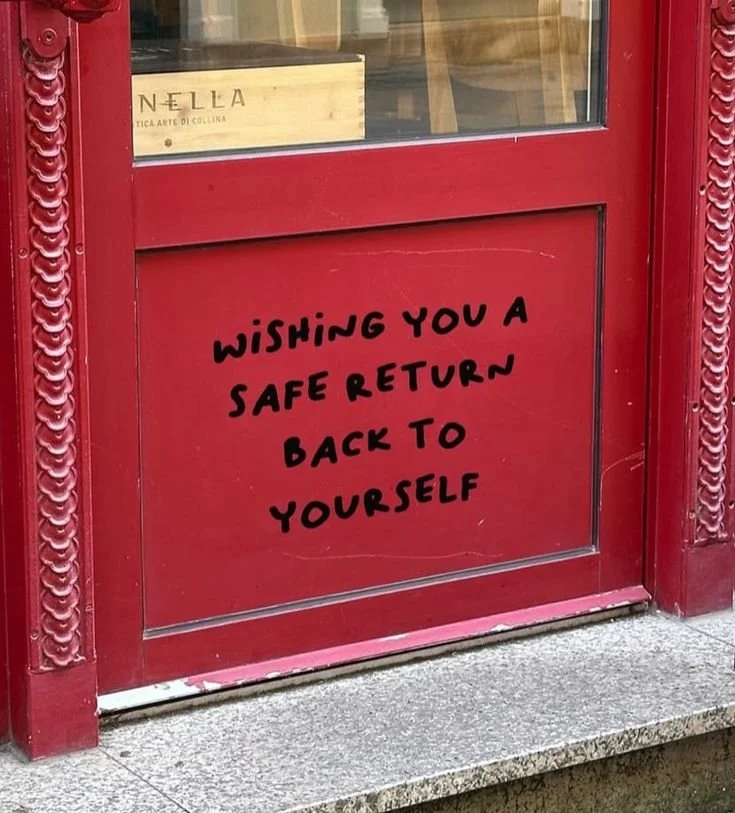
Healthy connection makes room for both belonging and individuality. You can love someone without believing everything they believe, value community while having boundaries, and appreciate where you came from while deciding some parts of it aren't coming with you :) And if you're only starting to figure out which parts of your identity actually feel like yours, you don't have to have ALL the answers yet. Learning to hear your own voice after years of listening for what everyone else needed takes time! If you grew up LDS, you might also find my page on LDS faith transition therapy helpful.
If this resonates with you, especially if your religious environment made it hard to develop boundaries, autonomy or an identity separate from your family or faith community, this is something we can explore together in therapy. Learn more about how I work with religious trauma →
I offer online therapy for women in Alaska, Arizona, Texas, Utah & Washington. Schedule a free 15-minute consultation.
credit: source unknown
