One of the hardest parts of working through people-pleasing is learning to trust other people to take care of themselves. People-pleasing gets talked about like we just care too much about what people think, but underneath it there's often an enormous amount of RESPONSIBILITY. We're not only wondering what someone wants. We're anticipating their feelings, preventing their disappointment, figuring out their boundaries for them, and sometimes deciding what they can and can't handle before they've had a chance to tell us.
So you don't ask a friend for help because she already has so much going on. You don't say you're hurt because you don't want her to feel guilty, you say yes to plans because they'll be disappointed if you don't come, and you don't bring something up with your partner because he had a stressful week. All of those choices can feel really considerate, and sometimes they are! Sometimes, though, we're also quietly taking responsibility for another adult's ability to manage their own experience.
PEOPLE-PLEASING CAN LOOK A LOT LIKE CARETAKING
If you're naturally empathetic and attentive to other people, it can be hard to tell where caring ends and over-responsibility begins. Of course we should consider how our choices affect people we love. Healthy relationships involve empathy, compromise, generosity, and sometimes doing something just because it matters to someone else. The real question is whether caring about their feelings has slowly turned into being responsible FOR their feelings.
There's a difference between "I know this might disappoint you, and I care about that" and "I can't make a decision that disappoints you." There's also a difference between "I know you're overwhelmed, so I want to be thoughtful about how I bring this up" and "I've decided you're too overwhelmed to hear what I need." When we keep making decisions on someone's behalf to protect them from discomfort, we're picking up something that may actually belong to them.
TRUSTING PEOPLE MEANS LETTING THEM HAVE BOUNDARIES
Imagine you need help with something, but you know your friend is busy, so you immediately decide, I shouldn't ask, she has too much going on. That sounds thoughtful! But what if you asked anyway? Now your friend gets to check her own capacity and say, "Absolutely," or "I can't today, but I could this weekend," or "I'm sorry, I really don't have the bandwidth right now." By asking instead of deciding for her, you're giving her the chance to know and communicate her own limits.
This requires us to trust that other adults are allowed to say no to us, which can be really uncomfortable for people-pleasers because we tend to assume everyone operates the way we do. If I struggle to say no, maybe they do too, so I'll protect them by never putting them in a position where they'd have to. Part of building healthier relationships is practicing something different: I can ask and you can say no, and you can ask and I can say no. Nobody has to secretly calculate and manage the other person's boundaries!!
TRUSTING PEOPLE MEANS LETTING THEM HAVE FEELINGS
This gets even harder when the thing we're protecting someone from is an EMOTION. Maybe your mom will be disappointed if you don't come home for the holiday, or your partner will feel hurt when you tell him something isn't working, or your friend will feel rejected when you skip her party. People-pleasing tells us that if our choice will cause an uncomfortable feeling, we're responsible for preventing it.
Disappointment isn't harmful, though. Neither is sadness, frustration or embarrassment! We don't have to go out of our way to create those feelings in people, but we also can't build our whole lives around making sure nobody ever has them because of a choice we made. Sometimes trusting someone means trusting that they can be disappointed and be okay. They can feel hurt and talk to us about it, dislike our boundary, or wish we'd chosen differently, and we can care about all of that without taking ownership of it.
OTHER PEOPLE ARE RESPONSIBLE FOR COMMUNICATING WITH US, TOO
Another version of this pattern is constantly trying to anticipate needs nobody has actually communicated. Are they mad at me? Was I supposed to offer to help? Are they secretly annoyed I haven't texted back? If you've spent a lot of your life reading rooms and monitoring moods, waiting for someone to just tell you what they need can feel almost irresponsible.
Healthy relationships can't require mind-reading! We can practice trusting that if someone needs something, they can say so, and if they're hurt or have a boundary or want help, they can tell us. If they don't, we haven't automatically failed by not figuring it out. Relationships aren't perfectly transactional, of course, and I'm not suggesting you respond to everything with "Well, you should have told me." We can still notice each other, check in, and anticipate needs sometimes, without believing the relationship depends on us correctly predicting everything the other person might feel.
WHAT IF THEY DON'T TAKE CARE OF THEMSELVES?
This is where it gets complicated, because sometimes people really don't communicate. They say yes when they mean no, skip the boundary and get resentful later, or expect you to know what they wanted without telling you. If you're used to people-pleasing, that can reinforce the belief that you really DO need to manage everything.
Another person's difficulty communicating their boundaries still doesn't make those boundaries your job. You can encourage direct communication, ask questions, care about your impact, and repair when you've actually missed something. What you can't do is get so good at anticipating someone's needs that they never have to take responsibility for expressing them (and honestly, that isn't fair to either of you). Relationships work better when both people get to be responsible for themselves.
CARING WITHOUT TAKING OVER
Trusting people to take care of themselves doesn't mean becoming less compassionate, refusing to help unless someone asks in writing, or ignoring obvious signs that someone is struggling. It means letting care and responsibility be two different things. I can care that you're disappointed without changing my answer. I can care that you're overwhelmed without deciding what you're capable of, and I can pay attention to your feelings without assuming they're mine to manage.
The same trust gets to move in the other direction, too :) Other people can trust you to communicate your boundaries instead of anticipating them for you, to say when something hurts, and to ask for what you need. Maybe that's part of what we're actually working toward with people-pleasing. We're not trying to care LESS about other people, we're trying to build relationships where everyone gets to take care of themselves and each other.
If this resonates with you, especially if you find yourself anticipating everyone's needs, managing their emotions or feeling responsible for making sure nobody is disappointed in you, this is something we can explore together in therapy. Learn more about how I work with people-pleasing →
I offer online therapy for women in Alaska, Arizona, Texas, Utah & Washington. Schedule a free 15-minute consultation.
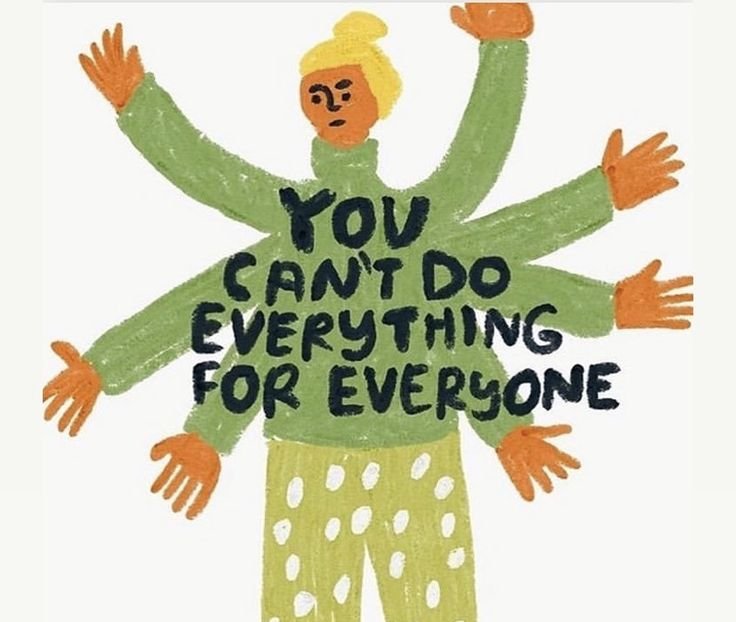
credit: www.instagram.com/peopleiveloved
