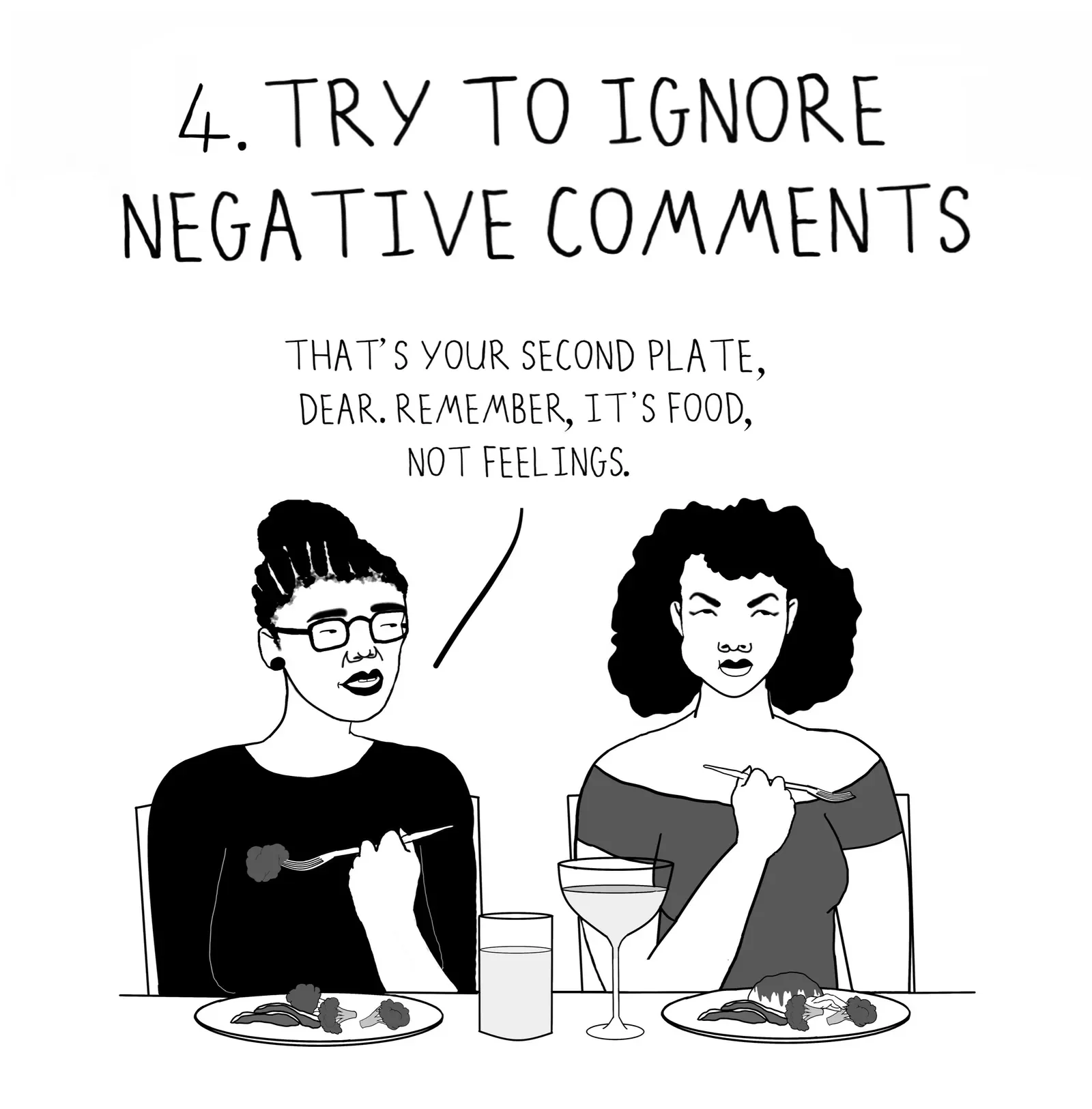
PEOPLE-PLEASING AT THE HOLIDAYS: WHY YOU LOSE YOURSELF THE MOMENT YOU WALK IN THE DOOR
You can spend all year doing the work. You set boundaries, you notice when you're over-giving, you practice letting people be disappointed without rushing in to fix it. And then you walk into your family's house for the holidays, and within about fifteen minutes you're refilling everyone's drinks, laughing at a comment that stung, and agreeing to stay an extra night you didn't want to stay. If that sounds familiar, I want you to know that nothing is wrong with you, and you haven't lost all of your progress!
The holidays are one of the most common times for people-pleasing to come roaring back, even for people who've done a lot of healing. It makes so much sense when we look at what the season actually asks of us, and once we understand it, we can start making a few different choices this year.
WHY THE HOLIDAYS BRING THE OLD ROLES BACK
Most of us learned to people-please inside our families. Maybe you were the peacekeeper, the easy kid, the one who noticed a parent's mood before they walked into the room. Those roles weren't random. They kept you connected to the people you depended on, and they often kept things calmer at home. When you go back into that same environment, with the same people, the same rooms and the same traditions, your nervous system recognizes it immediately and reaches for the strategies that used to keep you safe. You're not being dramatic or weak, your body is REMEMBERING.
On top of that, the holidays come with a script. There are expectations about who hosts, who cooks, who travels, how long you stay, what you talk about and what you definitely don't talk about. Add less sleep, more sugar, more alcohol for some families, and a lot of people in a small space, and it's no wonder the old patterns feel easier than the new ones. If your family has emotionally immature parents or a lot of unspoken rules, the pull can feel even stronger. (If that's you, my page on attachment wounds & mother wounds goes deeper into where this comes from.)
SIGNS YOU'RE PEOPLE-PLEASING YOUR WAY THROUGH THE SEASON
Sometimes people-pleasing is loud, like saying yes to hosting when you're already exhausted. More often it's quiet. You might notice you're scanning the room to make sure everyone's happy instead of actually being there. You might find yourself shrinking your opinions, changing your plans to keep one person from being upset, or rehearsing conversations in your head on the drive over. Maybe you're spending money you don't have on gifts so no one feels slighted, or you leave every gathering feeling like you need three days alone to recover.
None of these make you a bad person or a "pushover." They're signs that a part of you is working really hard to keep connection safe, and that part deserves some compassion, not criticism. The goal isn't to stop caring about your family. It's to have more CHOICE in how you show up, instead of running on autopilot.
WHEN THE HOLIDAYS ARE TIED TO RELIGION
If you've stepped away from the faith you grew up in, the holidays can bring a whole extra layer. There may be prayers before meals, church services everyone expects you to attend, or questions about why you don't go anymore. Some families handle a faith transition with curiosity, and some handle it with pressure, guilt or silence. It's really common to slip back into performing the version of yourself your family is most comfortable with, because it feels easier than another hard conversation.
You get to decide what feels right for you here, and that can change year to year. Some people go to the service and feel okay about it, some step out for a walk, and some create entirely new traditions. There's no right answer, only the one that lets you stay connected to yourself. If this is a big part of your story, you can read more about how I work with religious trauma & faith transitions.
SMALL WAYS TO STAY WITH YOURSELF THIS YEAR
You don't have to overhaul your family's traditions to feel different this season. Start before you arrive by asking yourself what you actually want from this visit and what you're willing to give. Deciding ahead of time how long you'll stay, whether you'll sleep there and which topics you'll gently redirect gives you a plan to come back to when the pull to please kicks in. It also helps to have one or two short, kind phrases ready, like "I'm going to pass on that this year" or "Let me think about it and get back to you," so you don't have to come up with something on the spot!
While you're there, give yourself little moments to check in. Step outside, take a slow breath in the bathroom, text a friend who gets it, or notice your feet on the floor. These tiny breaks interrupt the autopilot and remind you that you're an adult now, with choices you didn't have as a kid. If someone is disappointed by a boundary, try letting their feelings belong to them for a moment instead of immediately fixing them. Their disappointment doesn't mean you did something wrong.
And afterward, be gentle with yourself. If you fell back into old patterns, that's information, not failure. Get curious about what made it hard to stay with yourself in that moment, and what you might need next time. Healing people-pleasing is a practice, and holidays are some of the hardest reps there are.
YOU'RE ALLOWED TO HAVE A DIFFERENT KIND OF HOLIDAY
You're allowed to love your family and still need things to look different. You're allowed to leave early, skip a gathering, start a new tradition with friends, or spend part of the season resting. Taking care of yourself isn't selfish, it's how you get to show up as a real person instead of a performance! The people who are good for you will make room for that, even if it takes them some time to adjust.
If you notice that the holidays bring up a lot of guilt, resentment or exhaustion, that's worth paying attention to. It usually points to patterns that started long before this year, and those patterns can change with support.
If this resonates with you, especially if the holidays bring old people-pleasing patterns right back to the surface, you can learn more about therapy for people-pleasing →. I offer online therapy for women in Alaska, Arizona, Texas, Utah & Washington.